
How to Fertilize Christmas Cactus for Maximum Blooms: Seasonal Feeding Schedule
1. Why Feeding Decides Your December Blooms Save This Pin Christmas cactus flowers form at the tips of the newest segments, the flat, leaf-like “pads” that make up each stem. Every tip grown in spring and summer is a potential flower site in winter. So the real goal of summer feeding is simple: grow more…
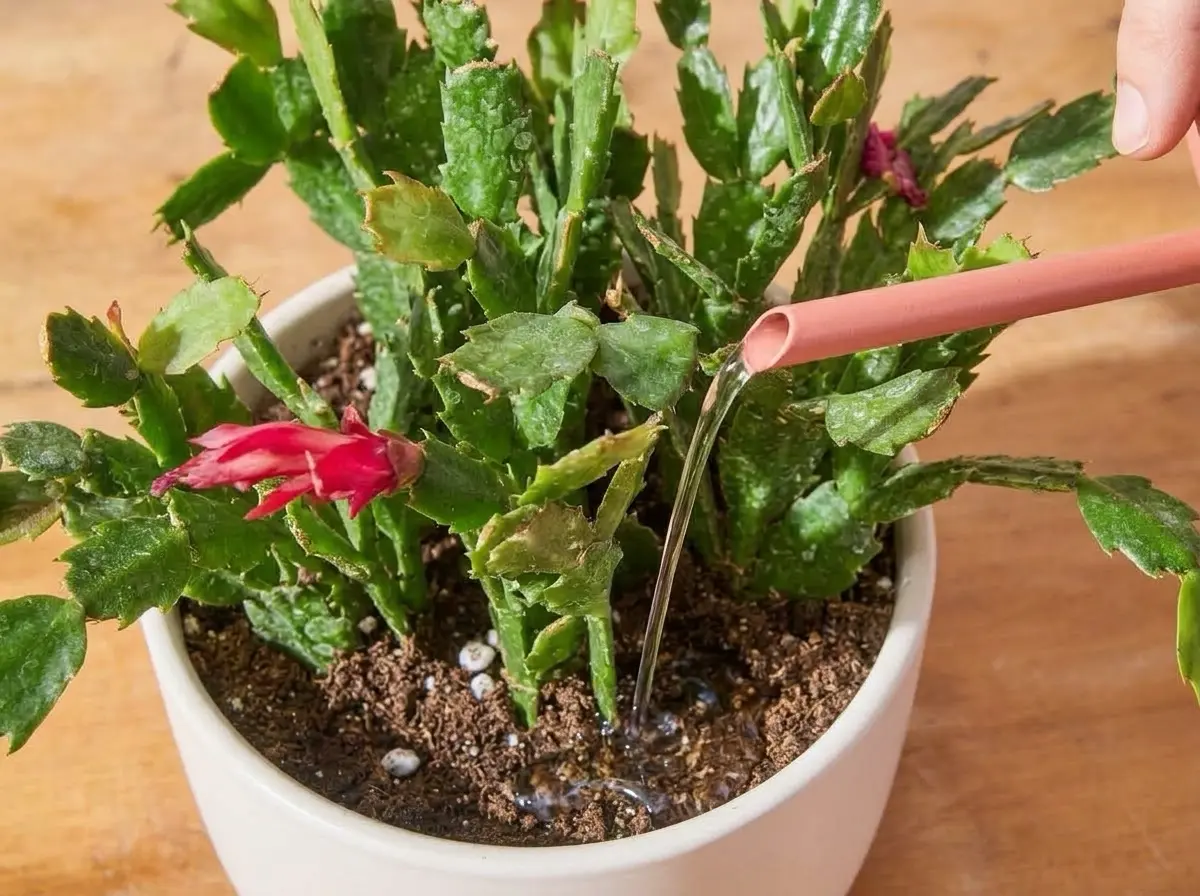
To fertilize a Christmas cactus, feed it a balanced, water-soluble fertilizer such as 20-20-20 or 20-10-20 with trace elements, mixed at half strength. Apply it about every 2 to 4 weeks while the plant is actively growing, from roughly March to August. Stop feeding by early September so the plant can set flower buds.
This plant also uses more magnesium than most houseplants. A monthly dose of Epsom salt (1 teaspoon per gallon of water) in spring and summer, given in a different week from your regular fertilizer, keeps the segments deep green.
Below you’ll find a season-by-season feeding schedule, how to mix the solution, how to spot over- and underfeeding, and the mistakes that cost you blooms.
A Christmas cactus that grows but never blooms is almost always missing one of two things: the cool, dark autumn nights that trigger flower buds, or a feeding routine that follows the plant’s calendar. You can’t control the first without the second. Feed at the wrong time and you get soft new leaves instead of buds. Feed too little in summer and you get a plant with too few segment tips to carry flowers.
The good news: once you understand the plant’s yearly rhythm, fertilizing becomes a simple, predictable routine that takes a few minutes a month.
1. Why Feeding Decides Your December Blooms
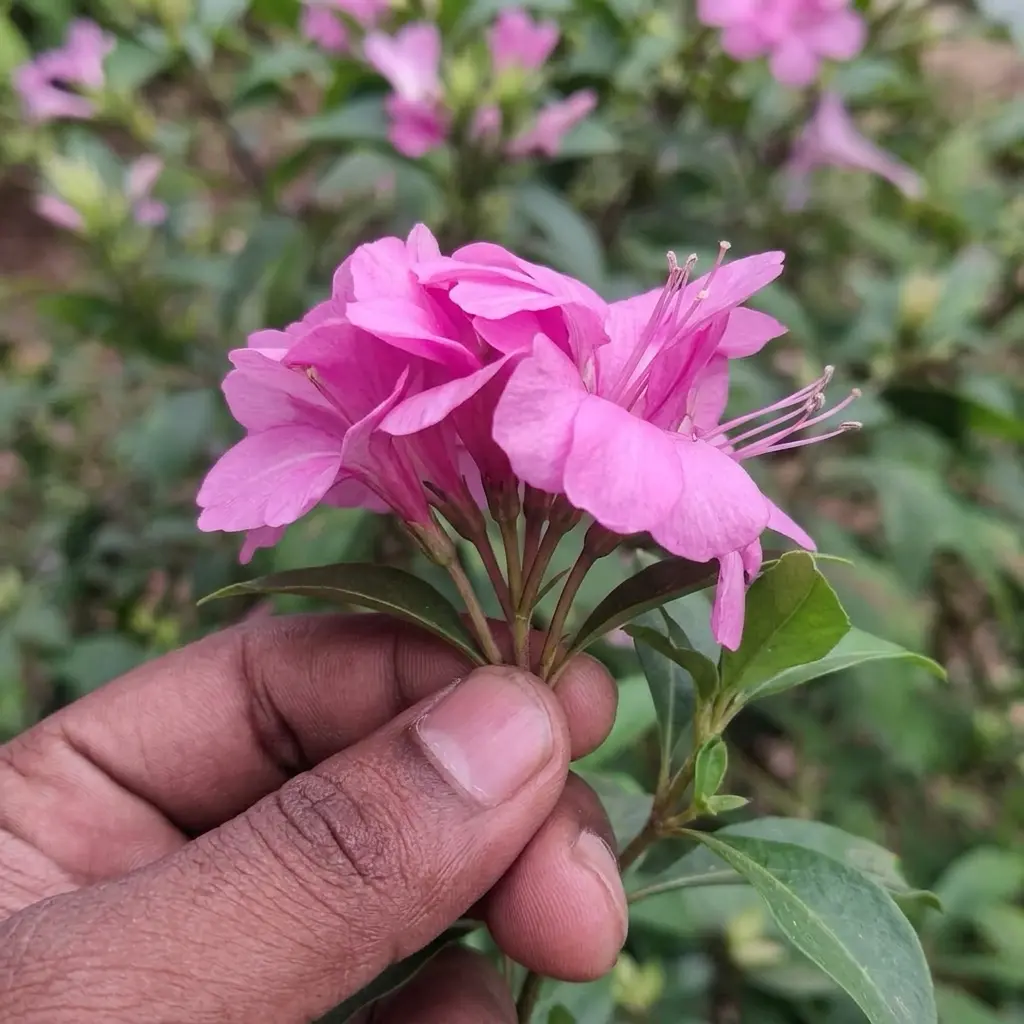
Christmas cactus flowers form at the tips of the newest segments, the flat, leaf-like “pads” that make up each stem. Every tip grown in spring and summer is a potential flower site in winter. So the real goal of summer feeding is simple: grow more healthy new segment tips.
In the wild, Schlumbergera grows on tree branches in the cloud forests of southeastern Brazil, rooted in a thin layer of moss and bark. It gets small, steady doses of nutrients from rain washing over organic debris, never a heavy feed. That’s why it responds best to weak, frequent feeding during growth and none at all while it’s setting buds.
There are two ways to get this wrong:
- Feeding in fall pushes new green growth when the plant should be switching to flower mode, which can mean fewer buds or none at all.
- Feeding too strong builds up mineral salts in a small pot, burning the fine roots and causing limp, wrinkled or rust-tipped segments.
2. The Best Fertilizer for Holiday Cactus
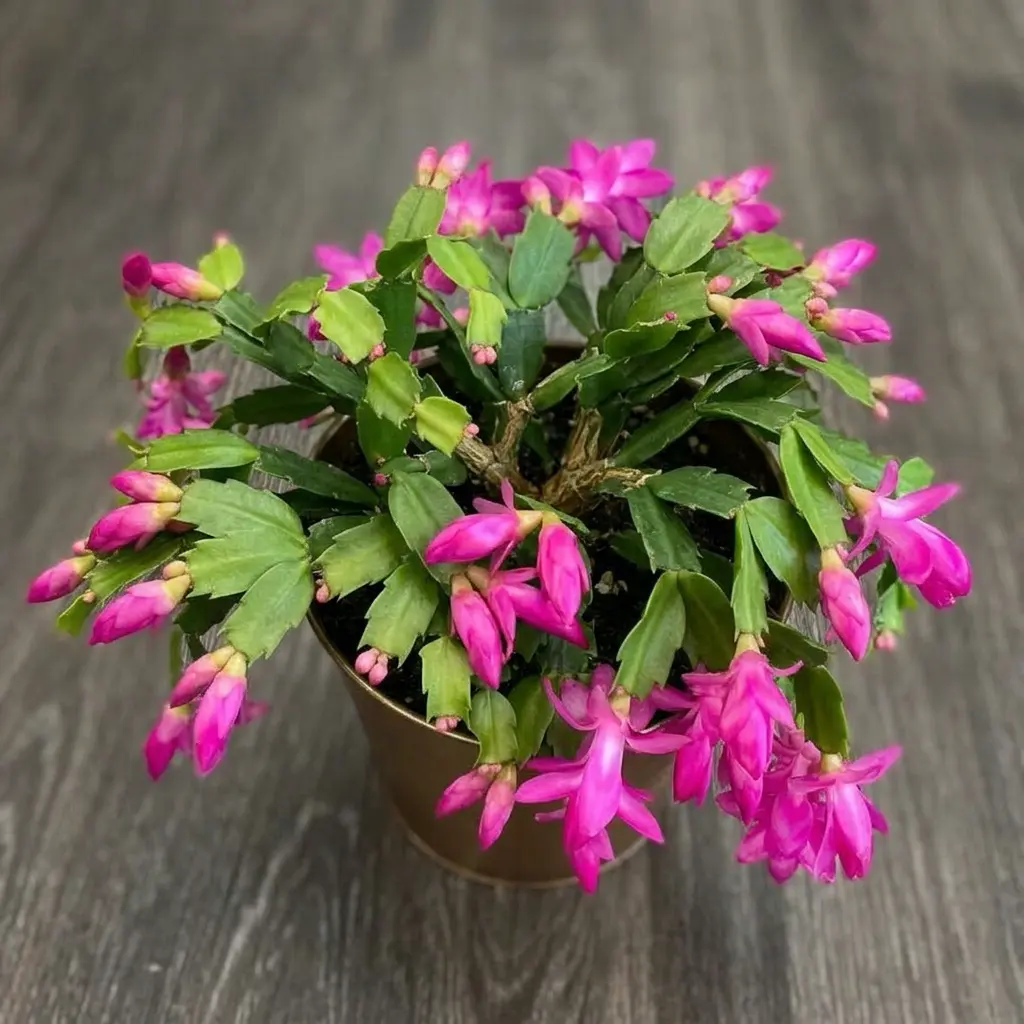
Christmas, Thanksgiving and Easter cacti all eat the same way, so any fertilizer that suits one suits the others. Clemson Cooperative Extension recommends a diluted soluble fertilizer such as 20-10-20 or 20-20-20 with trace elements, applied monthly during the growing season. UConn’s Home & Garden Education Center adds that phosphorus should be equal to or higher than nitrogen for the best blooms.
| Fertilizer type | Example ratio | How it fits | Verdict |
|---|---|---|---|
| Balanced water-soluble houseplant food | 20-20-20, 10-10-10 | Easy to dilute, fast-acting, even nutrition | Best all-round choice |
| Low-nitrogen bloom formula | 10-30-20, 15-30-15 | Supports flower development in late summer | Good for 1–2 August feeds only |
| Liquid cactus & succulent food | 2-7-7, 1-7-6 | Gentle, low nitrogen | Fine; may need a separate magnesium source |
| Orchid fertilizer | 20-20-20 or 30-10-10 | Made for epiphytes in bark mixes | Balanced version works well |
| Worm castings / compost tea | Low, about 1-0-0 | Mild, feeds soil life | Nice supplement, not enough alone |
| Slow-release granules | 14-14-14 coated | Keeps releasing into fall, when you want feeding stopped | Avoid |
How to read the label
The three numbers are the percentage of nitrogen (N), phosphorus (P) and potassium (K). Nitrogen builds green segments, phosphorus supports roots and flowers, and potassium helps with overall vigor and bloom quality. For a Christmas cactus you want a balanced feed during growth, then a brief tilt toward phosphorus and potassium before bud set. Also look for “trace elements” or “micronutrients” on the label, which usually include the magnesium and iron the plant needs. For a deeper look at N-P-K labels, see our guide to choosing the right fertilizer for tomato plants; the principles are the same.
3. Christmas Cactus Fertilizer Schedule by Season
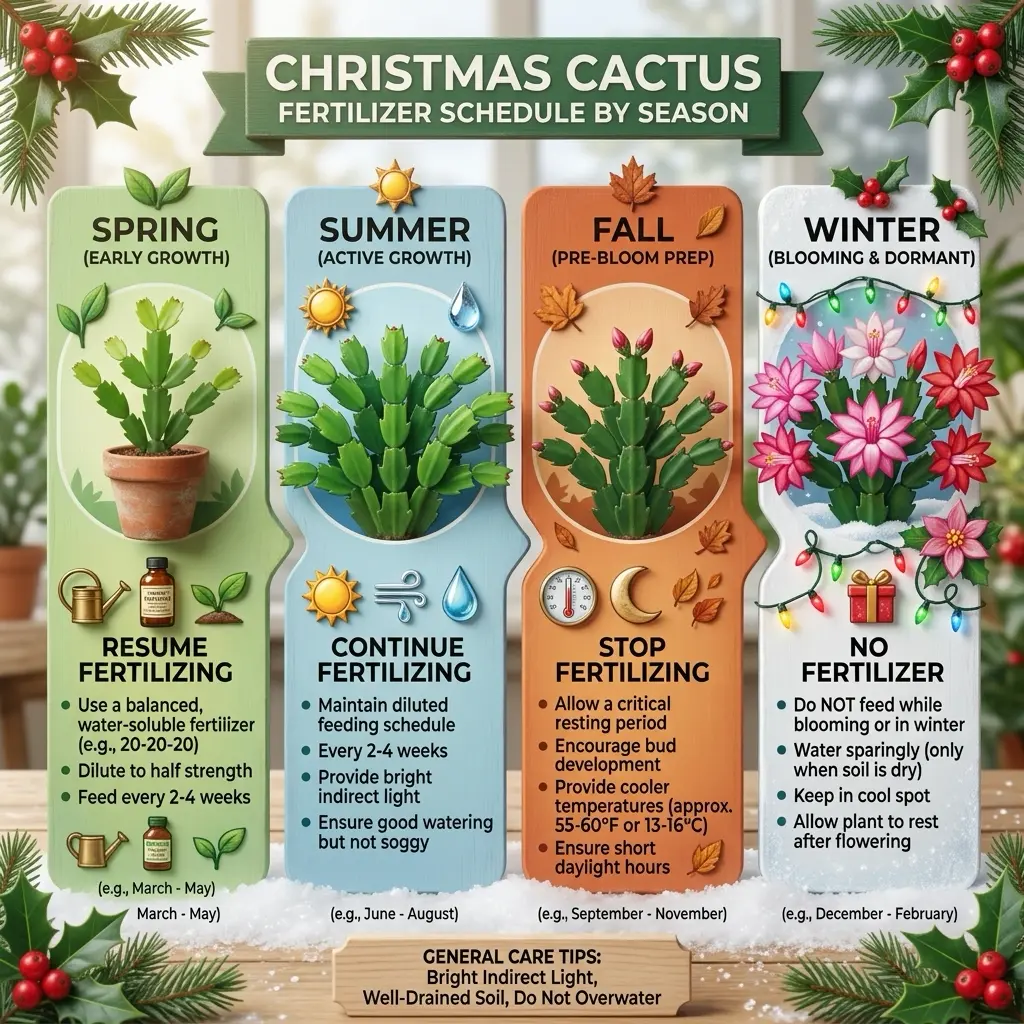
This seasonal feeding schedule follows the plant’s natural cycle in the Northern Hemisphere. If your plant blooms at Thanksgiving or Easter instead, shift the dates to match its bloom time.
| Period | Plant stage | What to feed | How often |
|---|---|---|---|
| January–February | Rest after bloom | Nothing | Plain water only |
| March | New segments emerging | Balanced, quarter strength | Once, to wake it gently |
| April–May | Active growth | Balanced, half strength + Epsom salt | Every 2–4 weeks; Epsom monthly |
| June–July | Peak growth | Balanced, half strength + Epsom salt | Every 2–4 weeks; skip in heat waves |
| August | Maturing segments | Bloom formula (high P-K), half strength | Once or twice, then stop |
| September–October | Bud set (cool, long nights) | Nothing | Plain water only |
| November–December | Buds swell and bloom | Nothing | Plain water only |
Why stop feeding in September?
Autumn is when the plant decides whether to bloom. Clemson Extension notes that flower buds form only after about six weeks of 14 or more hours of uninterrupted darkness each night, beginning around mid-September, ideally at temperatures of 60 to 68°F. Fertilizer, especially nitrogen, sends the opposite signal: keep growing leaves. That’s why feeding stops as the long-night routine begins. For the full bud-setting routine, see 7 easy ways to make your Christmas cactus bloom again.
Why not feed during bloom?
A blooming Christmas cactus is living on the energy it stored all summer. Feeding at this stage doesn’t add flowers. Excess salts can stress the roots, and stressed roots are a common cause of bud drop. Keep the soil lightly moist and let the plant enjoy its show.
4. How to Fertilize Christmas Cactus, Step by Step
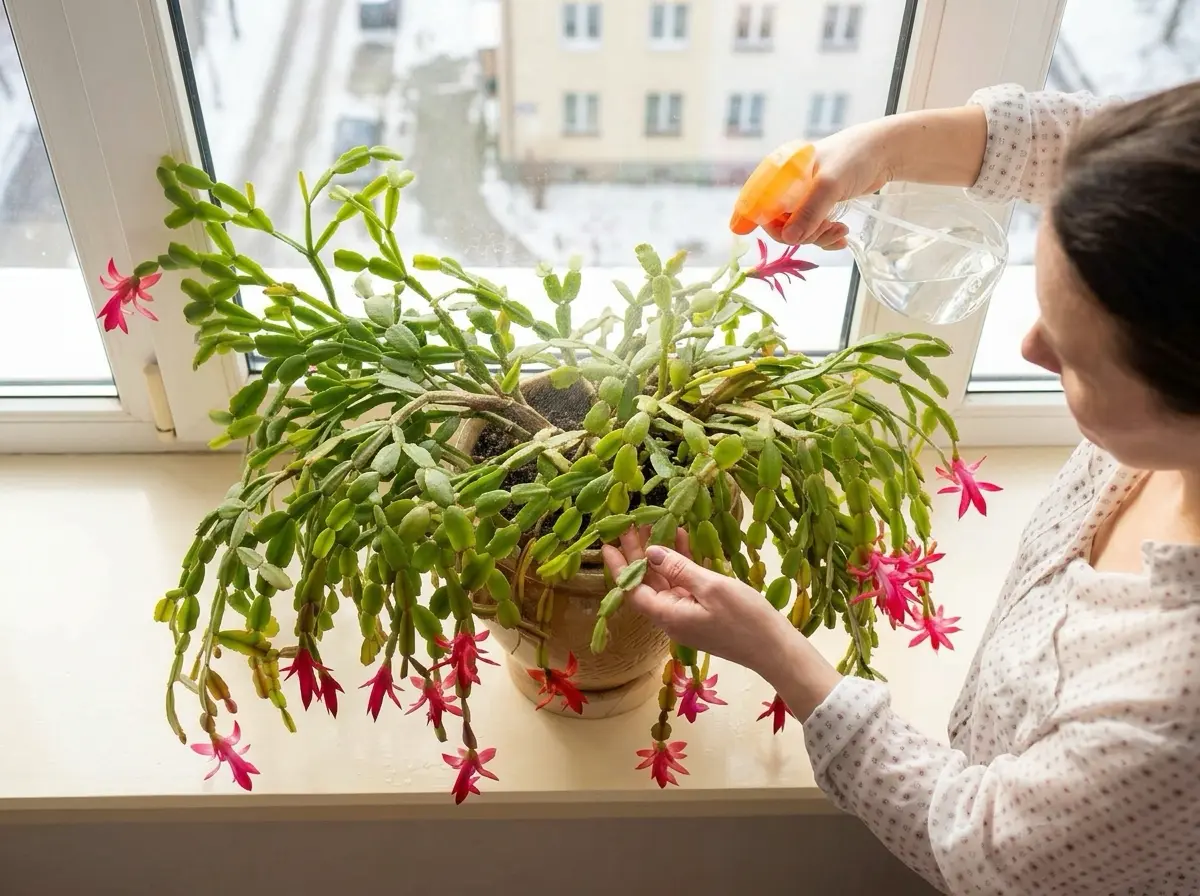
- Water first. Never fertilize dry soil. Water the plant with plain water, let it drain, and wait about 30 minutes. Fertilizer on dry roots burns them.
- Mix at half strength (or weaker). Read the houseplant rate on the label and use half. If the label says ½ teaspoon per gallon, use ¼ teaspoon. In March and during hot spells, use quarter strength.
- Use room-temperature water. Cold water can shock the roots of this tropical plant. Rainwater or filtered water is ideal if your tap water is very hard.
- Pour evenly until it drains. Apply the solution over the whole soil surface until a little runs from the drainage hole, then empty the saucer.
- Feed the soil, not the leaves. Keep solution off the segments. Wet leaves in low light can invite rot.
- Flush once a month. Run plain water through the pot for a minute or two to wash out accumulated salts, especially if you use tap water.
- Write it down. A small label in the pot with the date of the last feed makes the 2 to 4 week rhythm easy to follow.
Feeding and watering go hand in hand: a plant that’s watered correctly takes up nutrients far better. If you’re unsure about your watering rhythm, our guide on how often to water a Christmas cactus walks you through it season by season.
5. Magnesium and Epsom Salt: The Secret Ingredient
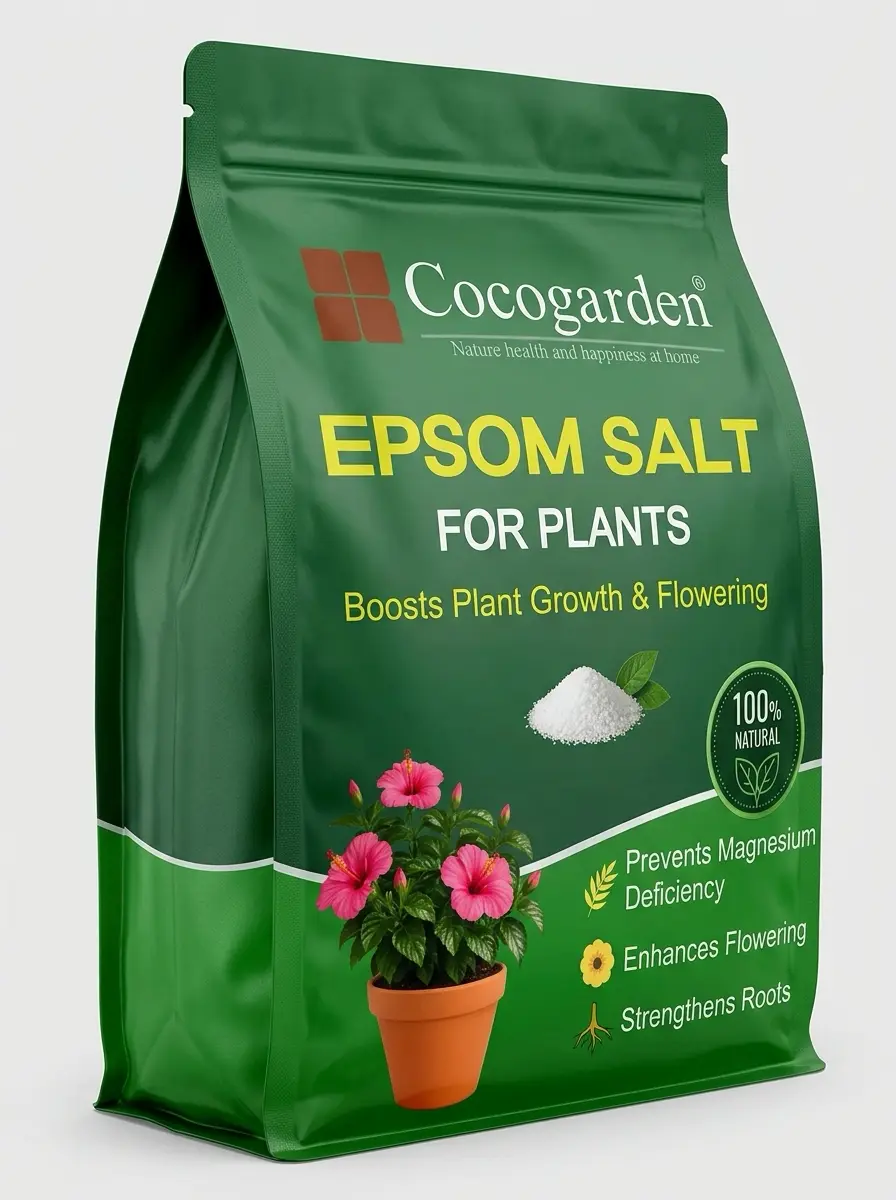
Holiday cacti need more magnesium than most houseplants, and many general fertilizers don’t supply enough. A shortage shows up as segments turning pale yellow or reddish while the plant is otherwise healthy. Epsom salt (magnesium sulfate) is a cheap, easy fix.
- Mix 1 tsp per gallon of water
- When monthly, April–August
- Rule not the same week as fertilizer
- Space it out. Clemson Extension advises applying Epsom salt in a different week from your regular fertilizer. A simple rhythm: fertilizer in week 1, Epsom salt in week 3.
- Don’t overdo it. Too much magnesium can interfere with calcium uptake. Once a month in the growing season is plenty.
- Skip it in fall and winter. Same rule as regular fertilizer: no feeding during bud set and bloom.
- Check your fertilizer label. If it already lists magnesium (Mg), you may only need Epsom salt every other month.
6. Overfed or Underfed? Reading the Segments
| What you see | Likely cause | What to do |
|---|---|---|
| Brown, crispy segment tips or edges | Fertilizer burn, salt buildup | Flush the pot with plain water; skip feeding for a month; resume at quarter strength |
| White crust on soil or pot rim | Mineral salts from fertilizer or hard water | Flush; scrape off the crust; use rainwater or filtered water |
| Limp segments dropping off, soil moist | Root damage from salts or overwatering | Check the roots; repot into fresh mix if brown and mushy |
| Lots of new leafy growth in fall, no buds | Feeding too late in the season | Stop feeding; give 14-hour nights and cool temperatures |
| Pale, yellow-green segments all over | Underfeeding (nitrogen) | Half-strength balanced feed every 2–3 weeks in the growing season |
| Reddish or yellowing segments, green veins | Low magnesium | Monthly Epsom salt, April–August |
| Very slow growth, few new tips in summer | Underfeeding or too little light | Feed regularly; move to bright, indirect light |
How to rescue an overfed Christmas cactus
- Take the plant to a sink and run lukewarm water slowly through the soil for about 5 minutes to dissolve and wash out the salts.
- Let it drain completely. Don’t return it to a saucer full of runoff.
- Pause all feeding for at least 4 weeks.
- If segments keep dropping, gently remove the plant and check the roots. Trim any brown, mushy roots and repot in fresh, fast-draining mix.
- Resume feeding at quarter strength once you see new growth.
7. Six Feeding Mistakes That Cost You Blooms

- Feeding year-round. The most common mistake. Feeding in fall and winter works against bud set.
- Using full-strength fertilizer. Label rates are written for fast-growing houseplants. Holiday cacti need half or less.
- Relying on slow-release pellets. They can’t be switched off in September, and they keep feeding right through bud set.
- Feeding a newly repotted plant. Fresh potting mix usually contains some nutrients, and disturbed roots burn easily. Wait 4 to 6 weeks.
- Feeding a sick plant. If segments are limp from root rot or cold damage, fertilizer adds stress. Fix the cause first.
- Using high-phosphorus “bloom boosters” all year. Excess phosphorus doesn’t add flowers once the plant has enough, and it builds up in the pot. Use them only in August.
Where the plant lives matters as much as what you feed it. A spot in bright, indirect light, away from heat vents, helps it use nutrients efficiently. An indoor plant stand near an east-facing window is ideal, and in autumn it’s easy to move to a cool room with no evening lamps during the bud-setting weeks.
Frequently Asked Questions
When should I start fertilizing my Christmas cactus?
Start in early spring, usually March, when you see new segments forming at the stem tips. Begin with one quarter-strength feed, then move to half strength every 2 to 4 weeks through summer.
How often should you fertilize a Christmas cactus?
Every 2 to 4 weeks from spring through August, using a half-strength water-soluble fertilizer. Don’t fertilize from September through February.
Should I fertilize my Christmas cactus while it is blooming?
No. Blooming Christmas cactus care is about steady moisture, cool temperatures and no drafts. Feeding during bloom doesn’t add flowers and can stress roots, which may cause bud drop.
Is Miracle-Gro good for Christmas cactus?
A balanced water-soluble houseplant food like Miracle-Gro All Purpose can work well if you dilute it to half strength or less and follow the seasonal schedule. Avoid using any brand at full strength.
Can I use coffee grounds or eggshells to feed a Christmas cactus?
They’re not a good substitute. Coffee grounds can crust over and hold too much moisture in a small pot, and eggshells break down far too slowly to feed the plant. A diluted balanced fertilizer is more reliable.
Do Thanksgiving and Easter cacti need a different fertilizer schedule?
The same fertilizers work, but shift the timing to match the bloom date. Thanksgiving cacti stop feeding a few weeks earlier. Easter cacti rest after winter, bloom in spring, and are fed through summer after flowering. See our guide to getting a Thanksgiving cactus to bloom again.
The Feeding Plan in One Minute
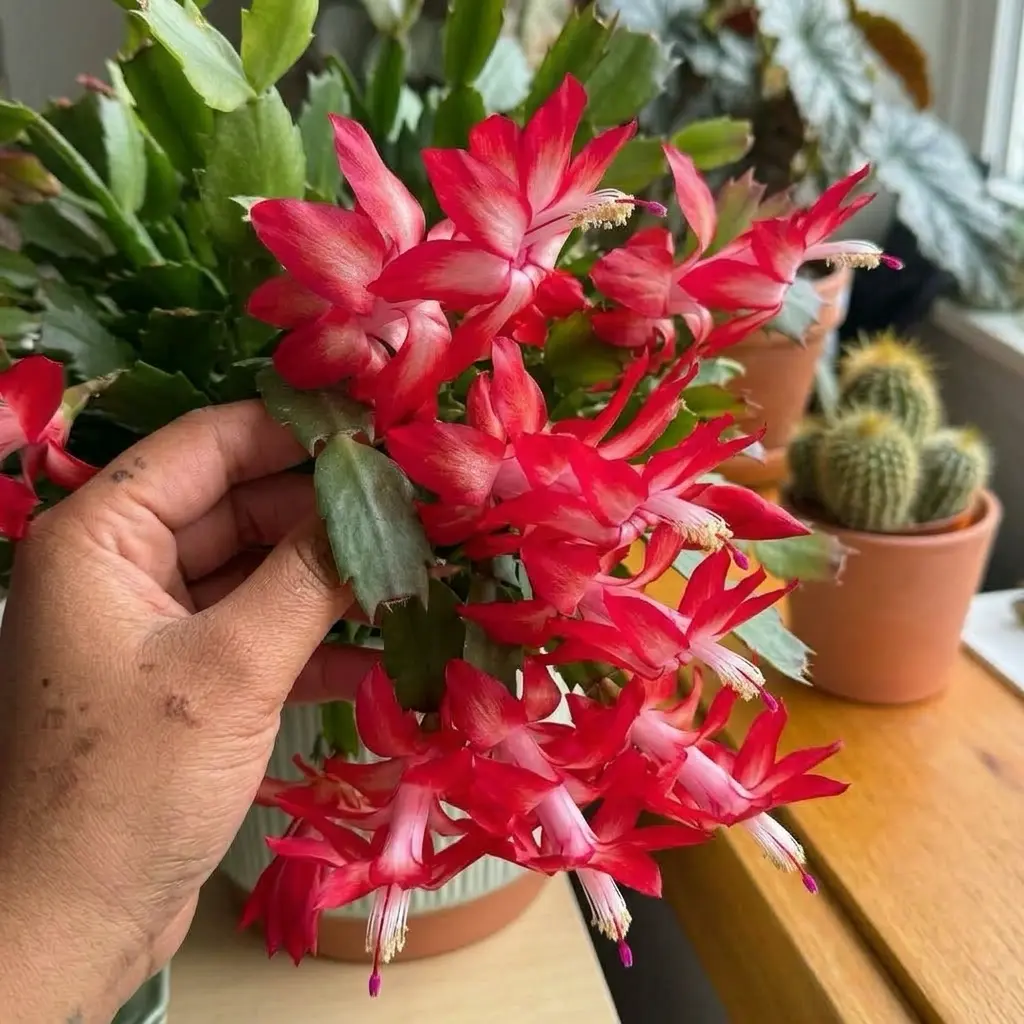
How to fertilize a Christmas cactus comes down to timing and strength. Rest it in January and February. Wake it with a quarter-strength feed in March. Feed a balanced, half-strength fertilizer every 2 to 4 weeks from April through July, with Epsom salt once a month in a different week. Give one or two bloom-formula feeds in August, then stop completely from September until the flowers fade.
Your next step: mark “Feed” on the first weekend and “Epsom salt” on the third weekend of each month from April to August, and “Stop feeding” on September 1. That simple habit, plus cool, dark autumn nights, is what turns a green plant into a winter show. Want more flowering houseplant ideas? Browse our roses and flowering plants collection.