7 Easy Ways to Make Your Christmas Cactus Bloom Again
If your Christmas cactus hasn’t flowered in a year or two, it’s probably not sick, and it’s probably not you doing something wrong day to day. Nine times out of ten it just hasn’t gotten dark enough, or cold enough, at night. Fix that one thing and most of the rest falls into place. Here’s…
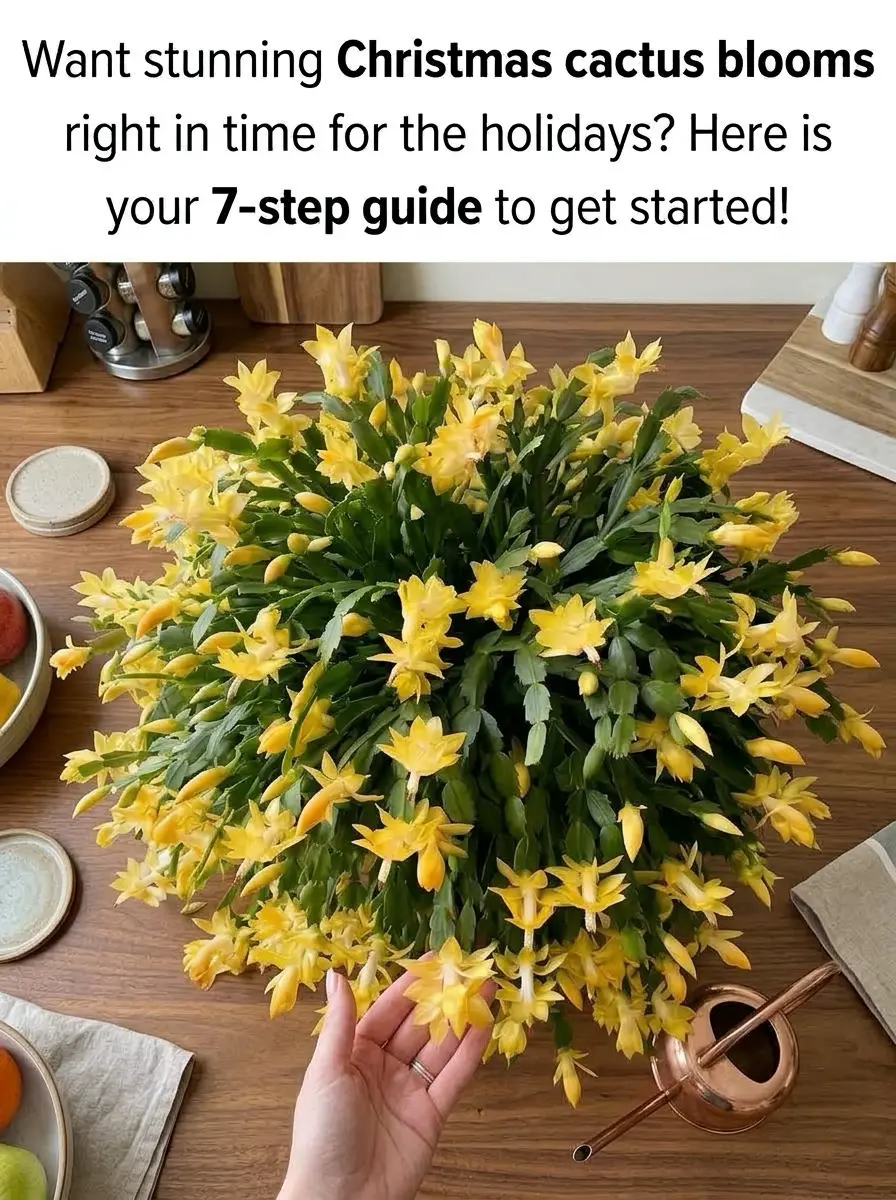
If your Christmas cactus hasn’t flowered in a year or two, it’s probably not sick, and it’s probably not you doing something wrong day to day. Nine times out of ten it just hasn’t gotten dark enough, or cold enough, at night. Fix that one thing and most of the rest falls into place. Here’s what actually works, roughly in order of how much it matters.
In this guide
- 1. Give it real, uninterrupted darkness for 6 to 8 weeks
- 2. Let the nights get cold
- 3. Cut back on water while it’s setting buds
- 4. Once buds show up, don’t touch it
- 5. Feed it like the seasons matter, because they do
- 6. Sort out light and humidity for the rest of the year
- 7. Only repot when it actually needs it
- Frequently asked questions
Give it 13 to 15 hours of uninterrupted darkness a night for 6 to 8 weeks, starting in mid-October. Keep nighttime temperatures between 55 and 65°F during that stretch. Let it dry out a bit until buds form, then water normally and stop moving it. Feed it only during the active growing season, and it should bloom right on schedule.
1. Give it real, uninterrupted darkness for 6 to 8 weeks
Christmas cactus doesn’t bloom because the days get shorter. It blooms because the nights get longer, and it needs those nights to be genuinely dark, not “the lamp’s off but the streetlight’s coming through the blinds” dark. Starting around mid-October, aim for 13 to 15 hours of unbroken darkness a night, for six to eight weeks, and you’ll have flowers for the holidays.
The easiest way to pull this off is a closet or a spare room the plant can just live in overnight. Covering it with a box works too, but people forget to put the box back after checking on it, and that’s usually where this falls apart. Even a hallway light clicking on for a minute or two can be enough to push the timeline back.
Pick a room you have no reason to walk into after dark. A closet beats a covered plant on the coffee table nine times out of ten, simply because nobody accidentally opens a closet door at 11pm to grab a book.
2. Let the nights get cold
Darkness does most of the work, but cold nights back it up and speed the whole process along. You’re looking for 55 to 65°F overnight, and honestly it can dip as low as 50°F without any harm. Daytime temperatures don’t need to change at all; it’s specifically that overnight drop the plant is reading as a signal.
An unheated porch, a cool guest room, or just a windowsill away from the heating vent will usually get you there without any real effort. If your house runs warm around the clock, though, this is the piece worth solving first.
| Timing | What to do |
|---|---|
| Early October | Start nightly darkness (13-15 hrs) and cool nights (55-65°F) |
| 2-4 weeks in | Buds begin forming at the stem tips |
| Once buds appear | Back to normal light and watering; stop moving the plant |
| 6-8 weeks from the start | Full bloom, timed for the holidays |
3. Cut back on water while it’s setting buds
If it’s mid-October and you’re still not seeing buds, easing off on watering can nudge things along. Let the top half of the soil dry out between waterings during this stretch instead of sticking to a schedule. Once buds actually show up, go back to watering normally. This is the part people get backwards: keeping a plant on the drier side once buds have already formed is a fast way to lose them before they open.
4. Once buds show up, don’t touch it
This is the one that trips people up most, honestly. A Christmas cactus in bud is fussy about change: a new spot, a draft from an opening door, a swing in temperature, even just turning the pot so a different side faces the window. Any of that can send it into dropping buds right when it was about to flower. Find a spot and leave it there.
The mistake almost everyone makes
Moving the plant somewhere more visible for the holidays, onto the mantel, the dinner table, wherever guests will see it, right as the buds are forming. That move alone is often enough to make it drop buds it was about to open. Bring the holiday decorating to the plant instead of dragging the plant to the decorating.
5. Feed it like the seasons matter, because they do
Fertilize with something balanced and water-soluble through spring, summer, and early fall, then stop around October, right when you start the darkness and cold routine. Pick feeding back up once new growth starts in spring. Keep feeding it through the fall and you’re basically fighting the rest period it needs to set buds in the first place.
6. Sort out light and humidity for the rest of the year
Outside of bloom season, this plant wants bright, indirect light, an east or north window is usually about right. Strong south or west sun will scorch those flat leaf segments faster than you’d think. It’s also, by origin, a rainforest epiphyte, so it likes more humidity than your average houseplant. A pebble tray under the pot, an occasional misting, or a humidifier nearby all help, especially once the heat kicks on and the air in the house dries out for winter.
7. Only repot when it actually needs it
Here’s the counterintuitive part: this plant blooms better when it’s a little pot-bound, so repotting every year is doing it a disservice, not a favor. When it genuinely needs it, roots crowding the pot, growth stalling, three-plus years since the last repot, do it right after it finishes blooming. Not before, not during. Repotting close to bud time causes the same kind of stress that makes it drop buds.
Skip standard potting soil on its own. A mix of roughly two parts all-purpose potting mix to one part perlite or pumice gets you closer to the loose, airy material this plant actually grows in out in the wild, and it matters more than it sounds like it should for keeping the roots healthy.
Frequently asked questions
Why does my Christmas cactus grow fine but never flower?
Almost always light and temperature, not feeding or soil. Most homes just never get dark or cold enough overnight for the plant to get the signal it needs. Give it six to eight weeks of real darkness and cool nights in the fall and that usually changes fast.
Is it too late to get blooms this year if I’m starting in November?
Later than ideal, but not a lost cause. It’ll probably just bloom a few weeks after the holidays instead of during them. Still worth starting the darkness and cool-night routine as soon as you realize you’re behind.
My buds are dropping before they open. What’s going on?
Usually one of three things: you moved the plant after buds formed, you let it dry out too much once buds had already set, or it hit a sudden temperature swing from a draft, a vent, or a cold window. Keep it in one spot with even watering from bud-set through bloom and this mostly sorts itself out.
Should I keep fertilizing while it’s blooming?
No, skip it during the darkness-and-cold period and while it’s actually flowering. Start feeding again once it’s done blooming and new growth picks back up in spring.