How Often to Water a Christmas Cactus: A Season-by-Season Schedule That Stops Root Rot
1. Why a Christmas Cactus Doesn’t Drink Like a Cactus The Christmas cactus (Schlumbergera) is an epiphyte. In the coastal mountains of southeastern Brazil it grows in the forks of trees and on mossy rocks, rooted in a thin layer of bark, leaf litter, and moss. Rain and mist soak it often, but that loose…
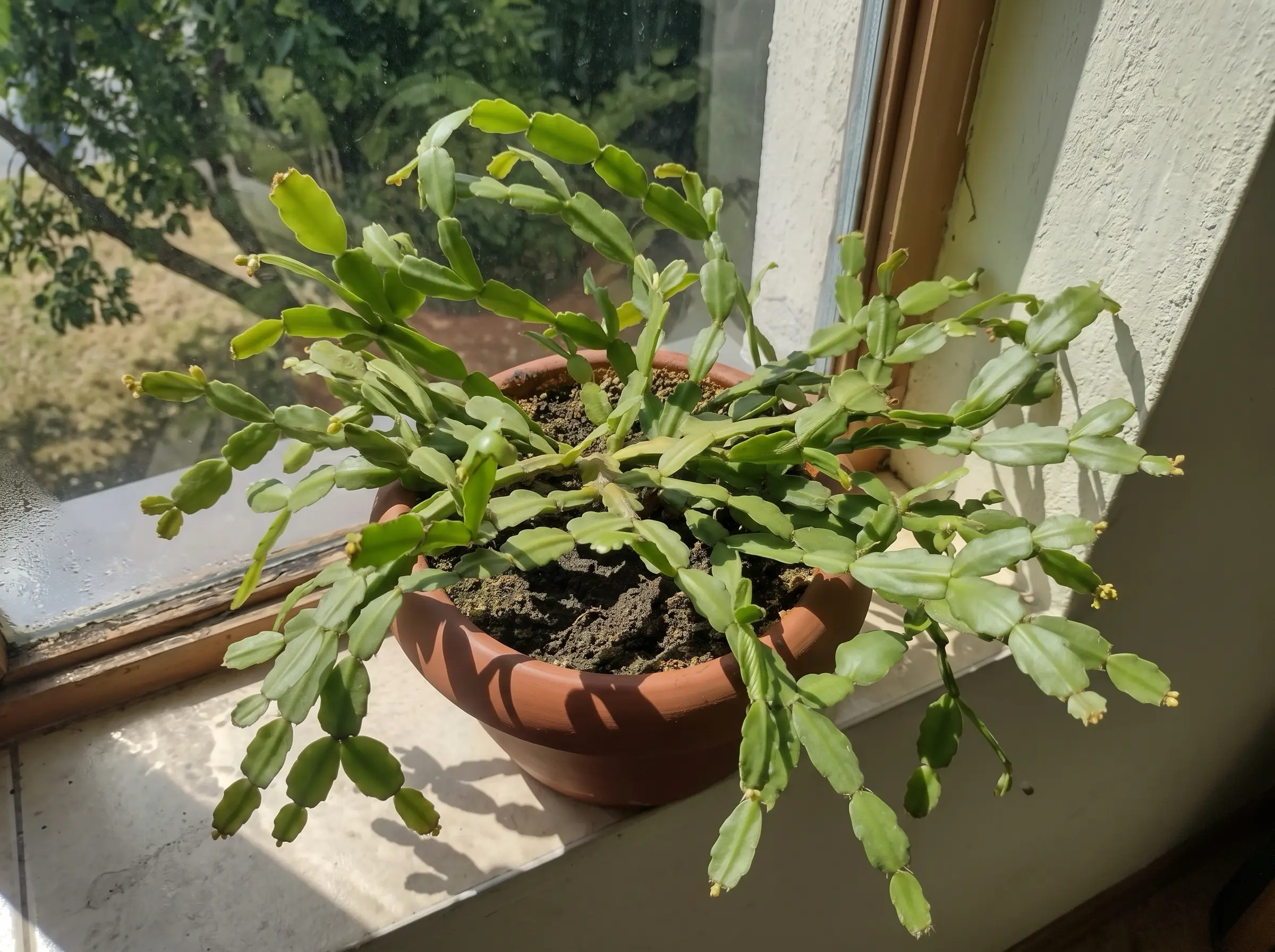
How often to water a Christmas cactus comes down to one rule: water when the top inch of soil is dry, not on a fixed calendar day. For most homes that works out to roughly every 7 to 10 days in spring and summer, every 2 to 3 weeks in fall while buds form, and a little more steadily during bloom.
This plant comes from humid Brazilian cloud forests, not the desert, so it wants moisture without wet feet. A loose, airy mix, a pot with drainage holes, and an empty saucer do more to prevent Christmas cactus root rot than any watering can.
Below you will find a month-by-month watering schedule, a 30-second soil check, the best way to water (top vs bottom), and how to tell an overwatered Christmas cactus from a thirsty one.
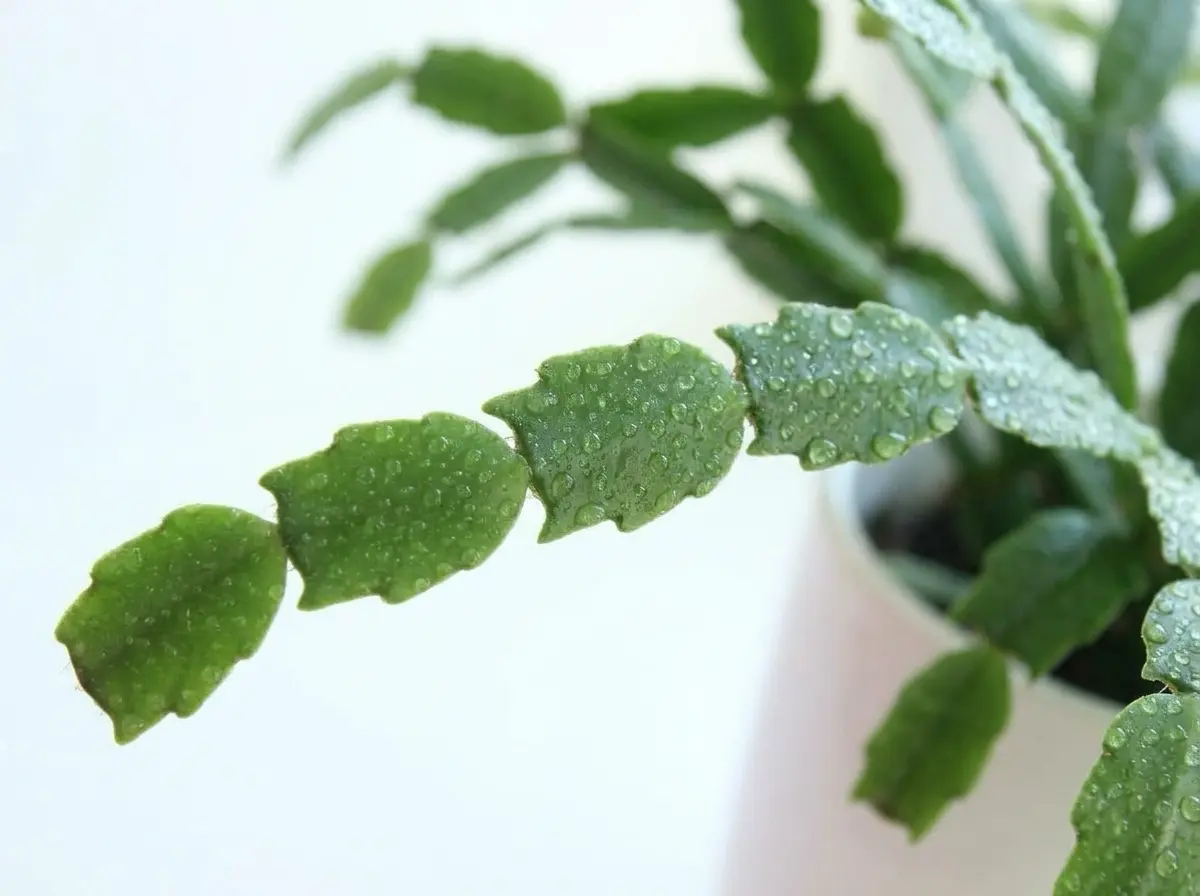
Most people who lose a Christmas cactus don’t lose it to neglect. They lose it to kindness: a splash of water every few days “just in case,” a pretty cachepot that hides a puddle, or a strict every-Sunday routine that ignores what the plant is actually doing. The good news is that once you understand how this plant uses water, the right rhythm is easy to find and easy to keep.
1. Why a Christmas Cactus Doesn’t Drink Like a Cactus
The Christmas cactus (Schlumbergera) is an epiphyte. In the coastal mountains of southeastern Brazil it grows in the forks of trees and on mossy rocks, rooted in a thin layer of bark, leaf litter, and moss. Rain and mist soak it often, but that loose material drains within minutes, and air reaches the roots almost constantly.
That tells you two things about watering at home:
- It wants more water than a desert cactus. Letting the pot go bone-dry for weeks causes wrinkled, limp segments and dropped buds.
- Its roots need air as much as water. Fine, shallow roots suffocate quickly in dense, soggy soil, which is how Christmas cactus root rot starts.
So the goal is not “a little water often” or “lots of water rarely.” It is a full, thorough drink, followed by a partial dry-down before the next one. The UConn Home & Garden Education Center describes it simply: keep holiday cacti moderately moist while they are growing, and never let them sit in a saucer of water.
2. The 30-Second Check: When to Water
A calendar can’t see your soil. A finger can. Before every watering, run through this quick check:
- Touch test. Push a finger into the soil up to the first knuckle, about 1 inch (2.5 cm). If it feels dry, water. If it feels cool or damp, wait and check again in two days.
- Weight test. Lift the pot right after watering once, so you learn what “full” feels like. A pot that feels noticeably light is ready for water. After a few weeks this becomes the fastest method.
- Look at the segments. Plump, firm, glossy segments mean the plant is well hydrated. Slightly soft or dull segments mean it is ready for a drink.
If you have a wooden chopstick or skewer, push it to the bottom of the pot and pull it out after a minute. Dark, damp wood means the lower root zone is still wet, even if the surface feels dry. This is especially useful for larger or deeper pots.
3. Christmas Cactus Watering Schedule by Season
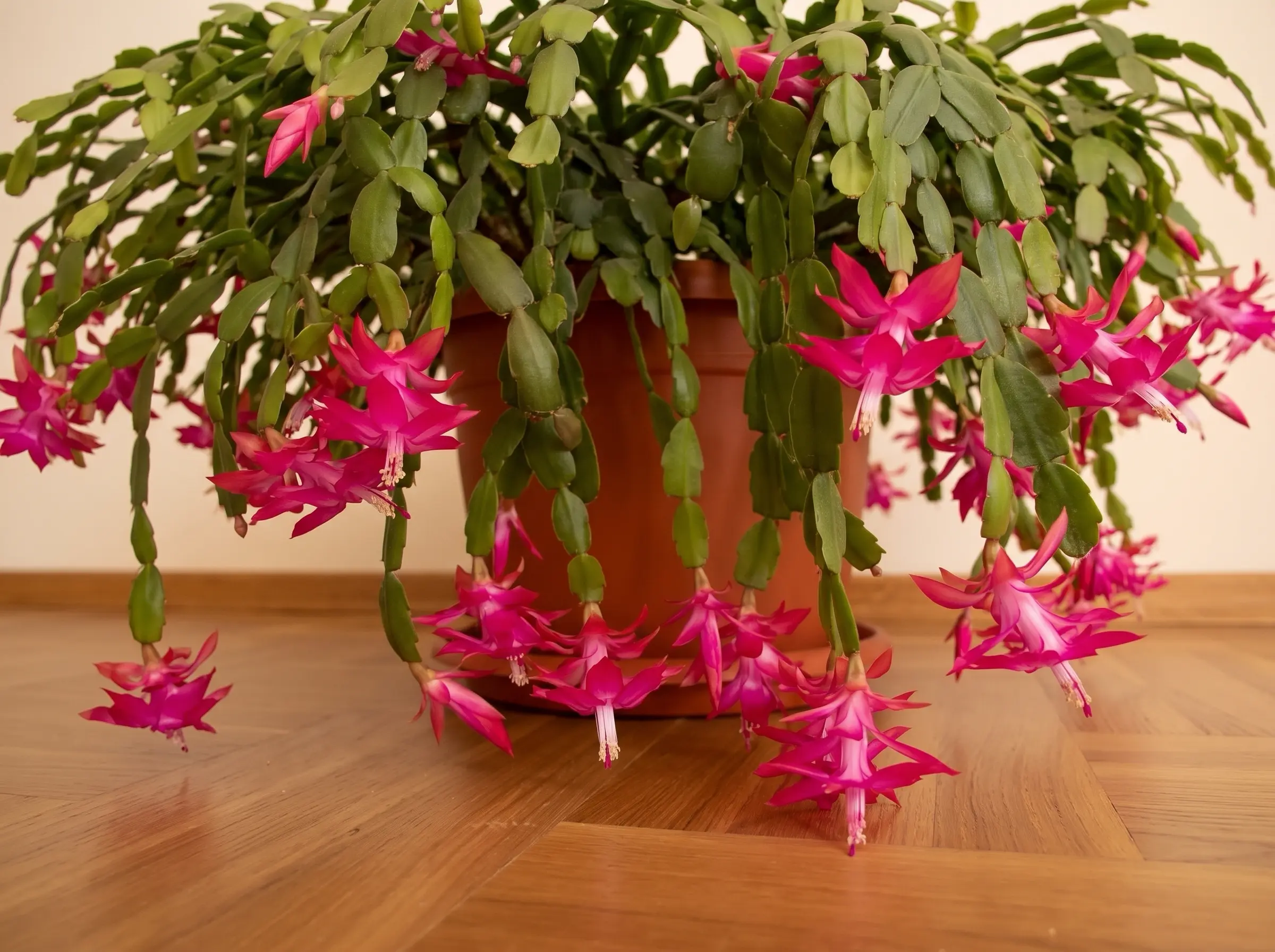
A Christmas cactus has a yearly rhythm: summer growth, an autumn “rest” that triggers buds, winter bloom, and a short recovery afterward. Water follows that rhythm. The frequencies below are typical for a 4 to 6 inch pot in a bright, heated home. Always let the finger test have the final word.
| Season / stage | What the plant is doing | Let the soil dry to | Typical frequency |
|---|---|---|---|
| Spring (March to May) | New segments forming, active growth | Top 1 inch dry | Every 7 to 10 days |
| Summer (June to August) | Peak growth, warm temperatures | Top 1 inch dry | Every 5 to 8 days (more if outdoors) |
| Early fall (September to October) | Resting; cool nights and long darkness set buds | Top 1.5 to 2 inches dry | Every 2 to 3 weeks |
| Bud and bloom (November to January) | Buds swelling and opening | Top 1 inch dry, never bone-dry | Every 7 to 10 days |
| After bloom (February) | Short rest before new growth | Top 2 inches dry | Every 2 to 3 weeks |
Why you water less in fall
Easing off water in autumn, together with cool nights around 55 to 60°F (13 to 16°C) and 12 to 14 hours of uninterrupted darkness, is what tells the plant to set flower buds. Keep watering at full summer pace and you will usually get more leaves and fewer flowers. For the full bloom routine, see 7 easy ways to make your Christmas cactus bloom again.
Why you go back to steady watering during bloom
Open flowers and swelling buds lose water quickly. A plant that dries out completely at this stage often drops its buds overnight. Once you see buds the size of a grain of rice, return to watering whenever the top inch is dry, and keep the plant away from heat vents and cold drafts, which dry the soil unevenly. Penn State Extension lists drought stress, saturated soil, and temperature extremes among the main causes of holiday cactus bud drop.
4. Five Things That Change How Often You Water
Two identical plants can need water on very different days. These are the variables that matter most.
1. Pot material and drainage
Unglazed terracotta breathes and dries noticeably faster than plastic or glazed ceramic, which makes it forgiving for heavy-handed waterers. Plastic holds moisture longer, which suits warm, dry rooms. Whatever you choose, it must have a drainage hole. A decorative pot without one is fine as an outer cover, but lift the inner pot out to water and let it drain before putting it back.
2. Pot size
Christmas cacti like to be slightly root-bound and bloom better that way. An oversized pot holds a big volume of soil the roots can’t reach, and that soil stays wet for days. Move up only one size (about 1 to 2 inches wider) every three to four years.
3. Christmas cactus soil mix
Regular potting soil alone holds too much water. A good Christmas cactus soil mix drains in seconds and stays airy:
- 2 parts quality potting mix
- 1 part perlite or pumice
- 1 part fine orchid bark
UConn suggests a similar peat-based blend with perlite and sand, at a slightly acidic pH of 5.5 to 6.5. If your tap water is hard and alkaline, it can slowly push that pH up; our guide to water pH and what it does to your plants explains how to test and adjust it.
4. Light and temperature
A plant in a bright east window at 72°F uses water far faster than one in a cool, dim corner at 62°F. Bright, indirect light is ideal; hot afternoon sun scorches the segments and dries the pot too fast. Raising the plant to window height on an indoor plant stand gives it better light and keeps it off cold floors and away from radiators, both of which make watering less predictable.
5. Humidity and airflow
Winter heating can drop indoor humidity below 30 percent, which dries both soil and segments quickly. Grouping plants together or setting the pot on a pebble tray (with the pot base above the water line) raises humidity around the leaves without soaking the roots.
5. How to Water a Christmas Cactus Step by Step
- Check first. Only water if the top inch is dry (or the top 2 inches during rest periods).
- Use room-temperature water. Cold water straight from the tap can shock tropical roots. Rainwater or filtered water is ideal if your tap water is very hard.
- Water slowly and evenly. Pour gently around the whole soil surface, not in one spot, so the entire root ball gets wet rather than one channel down the side.
- Keep going until water drains. Stop when water runs freely from the drainage hole. That confirms the full root zone is moist.
- Drain completely. Let the pot sit in the sink for 10 to 15 minutes.
- Empty the saucer. Never leave the pot standing in water. This single habit prevents more root rot than anything else on this list.
Avoid “sip watering” (a few tablespoons every couple of days). It keeps the surface constantly damp, encourages fungus gnats, and never reaches the lower roots.
6. Top Watering vs Bottom Watering
Both methods work. The best routine for most homes is to bottom water most of the time and top water about once a month.
| Top watering | Bottom watering | |
|---|---|---|
| How | Pour over the soil until it drains | Stand the pot in 1 to 2 inches of water for 15 to 20 minutes, then drain |
| Best for | Flushing out fertilizer and mineral salts | Even, deep moisture without soaking the crown |
| Risk | Easy to overdo or wet the stem base | Salts slowly build up at the surface if used exclusively |
| Good sign it worked | Water runs from the drainage hole | Soil surface looks darker and feels damp |
Bottom watering a Christmas cactus the right way
- Use a bowl or sink with 1 to 2 inches of room-temperature water.
- Leave the pot for 15 to 20 minutes, no longer. Hours in a basin turn bottom watering into overwatering.
- Lift it out and let it drain on a rack before returning it to its saucer.
- Once a month, water from the top until it drains well, to rinse accumulated salts out of the mix.
7. Overwatered vs Underwatered: Reading the Leaves
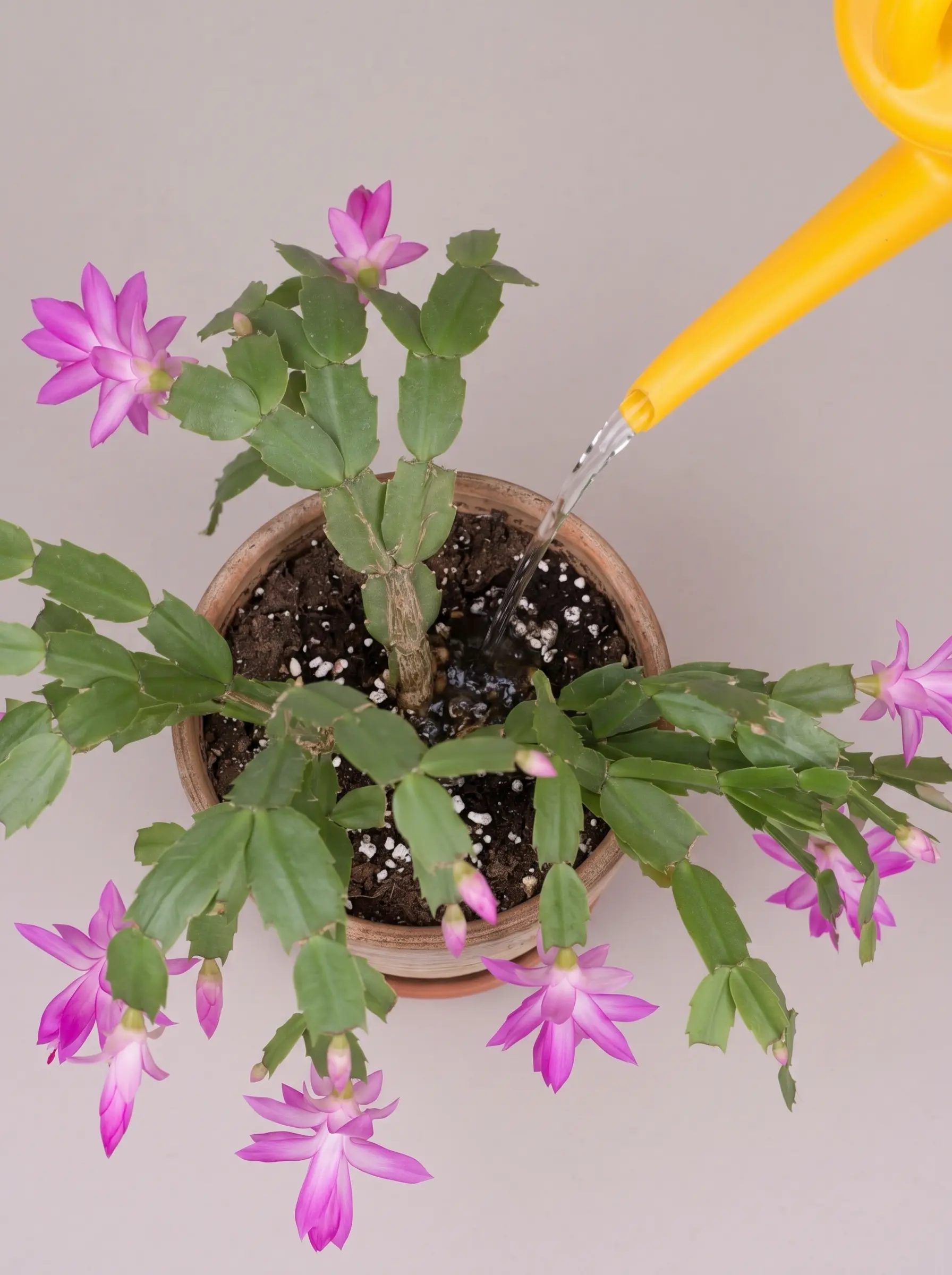
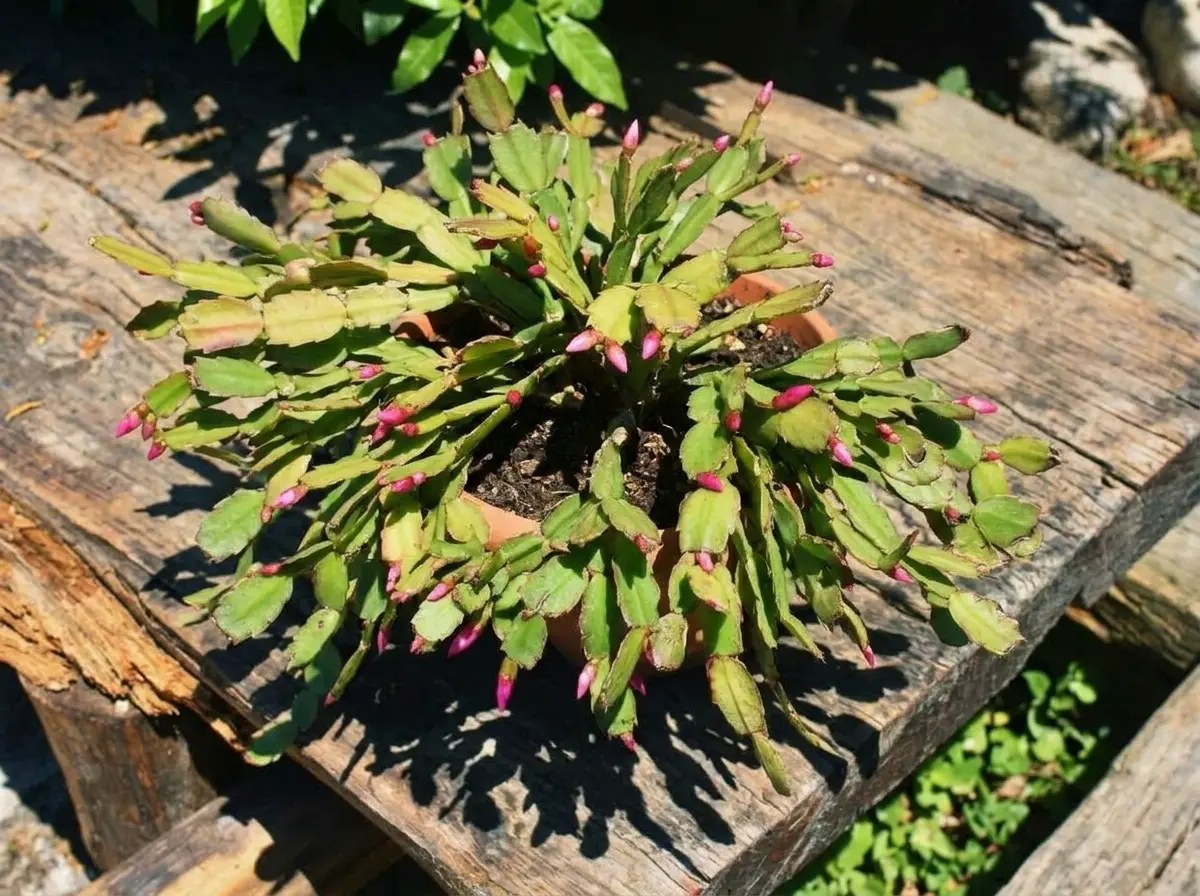
The confusing part is that both problems can make the segments go limp. The soil and the texture of the segments tell you which one you are dealing with.
| What you see | Overwatered Christmas cactus | Underwatered Christmas cactus |
|---|---|---|
| Segments | Soft, mushy, translucent or dark at the base | Thin, wrinkled, shriveled but not mushy |
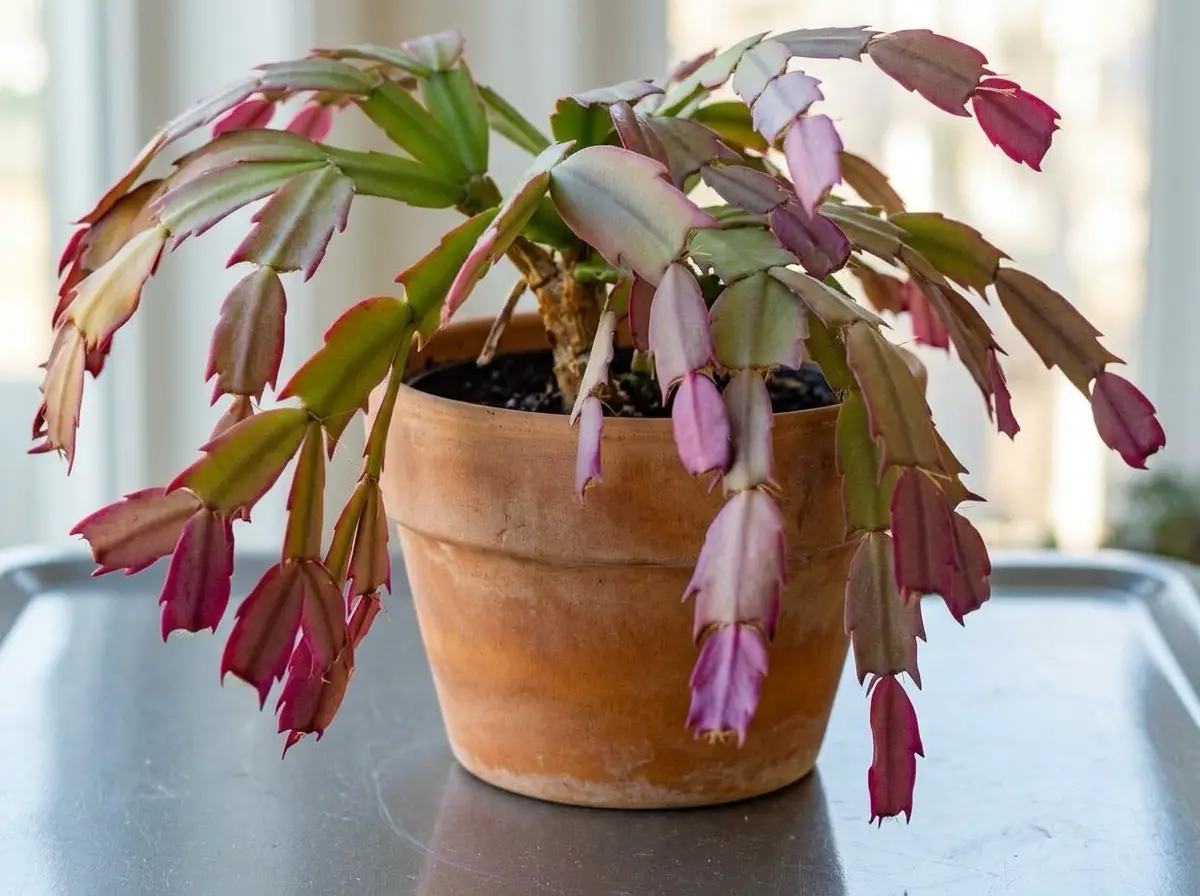
| Color | Yellowing, or dark and water-soaked near the soil | Dull green, sometimes reddish or purple tinge |
| Soil | Wet for days; may smell sour or musty | Dry, shrinking away from the pot edge |
| Stem base | Soft, brown, or black | Firm |
| Buds | Drop; roots often rotting | Drop; plant perks up within a day of watering |
| Pests | Fungus gnats hovering over soil | Rarely |
Christmas cactus limp leaves: a quick decision
Feel the soil. If it is dry, water thoroughly and the segments should plump up within 24 to 48 hours. If it is wet and the plant is still limp, the roots are not working, and adding more water will only make it worse. Go straight to the rescue steps below.
Watch for purple or reddish segments too. A light purple tinge can come from too much sun or cold, but combined with wrinkling it usually means the roots aren’t taking up enough water, either because the soil is too dry or because the roots are damaged.
8. How to Save a Christmas Cactus With Root Rot
If the stem base is soft and the soil smells sour, act quickly. Christmas cactus root rot spreads fast, but a plant with some healthy tissue can usually be saved.
- Unpot the plant and gently shake or rinse away the wet soil.
- Inspect the roots. Healthy roots are white or tan and firm. Rotted roots are brown or black, slimy, and pull apart easily.
- Trim the damage with clean, sterilized scissors, cutting back to healthy tissue. Remove any mushy segments at the base too.
- Let it air-dry for several hours to a day so the cuts can callus.
- Repot in fresh, dry mix (see the recipe above) in a clean pot with drainage, no bigger than the remaining root mass.
- Wait before watering. Hold off for 5 to 7 days, then water lightly and resume the normal dry-down routine.
- Take backup cuttings. If the roots are almost all gone, twist off healthy 2 to 3 segment pieces, let them callus for a day, and root them in barely moist mix. It’s an easy way to keep the plant going even if the parent fails.
Frequently Asked Questions
How often should I water a Christmas cactus indoors?
Indoors, most Christmas cacti need water about every 7 to 10 days during spring, summer, and bloom, and every 2 to 3 weeks during the fall and post-bloom rest. Water only when the top inch of soil feels dry.
Can I use ice cubes to water my Christmas cactus?
It’s not a good idea. Christmas cacti are tropical, and melting ice chills the roots and wets only a small patch of soil. Use room-temperature water and soak the whole root ball instead.
Should I water my Christmas cactus while it is blooming?
Yes. Keep the soil lightly moist during bloom, watering whenever the top inch is dry. Letting it dry out completely while in flower is a common cause of dropped buds.
Should I mist my Christmas cactus?
Light misting can help in very dry winter rooms, but it doesn’t replace watering the soil. A pebble tray or grouping plants together raises humidity more steadily.
Why is my Christmas cactus dropping buds?
The usual causes are soil drying out completely, soggy roots, sudden temperature changes, drafts, or moving the plant after buds form. Keep watering steady and leave the plant in one place once buds appear.
Is tap water okay for a Christmas cactus?
Usually, yes. If your water is very hard, leave it out overnight to reach room temperature, flush the pot from the top once a month, or mix in rainwater to keep salts and pH in check.
The Short Version
Water your Christmas cactus when the top inch of soil is dry, soak it until water drains out, and never let it stand in a full saucer. Lean toward more frequent watering in summer and during bloom, and ease off in fall and just after flowering. When in doubt, wait a day: a slightly thirsty Christmas cactus recovers within hours, but a waterlogged one can take weeks to come back.
Your next step: do the finger test today and write the date on a sticky note on the pot. After two or three cycles, you’ll know your plant’s real rhythm, and you’ll never need to guess again. Once you have watering sorted, explore more easy-care flowering plants in our roses and flowering plants collection, including 15 spring-blooming flowers to sow this fall.